
From Plastic Waste to Food: NASA-Funded Tech Turns Trash Into Edible 3D-Printed Biscuits

Global population growth currently creates dual urgent challenges for the sustainable survival of human life on Earth. On one hand, the global food supply faces heavy pressure due to a surging demand for food expected to increase significantly over the coming decades. On the other hand, the continuous accumulation of synthetic plastic waste relentlessly pollutes terrestrial and marine ecosystems without fully sustainable recycling solutions. From Plastic Waste to Food: NASA-Funded Tech Turns Trash Into Edible 3D-Printed Biscuits
Consequently, modern scientists constantly explore breakthrough technologies to resolve both of these massive issues simultaneously. Through advanced biotechnology approaches, non-biodegradable waste that originally harmed the environment now holds the potential to become a safe, nutrient-dense food source for humanity’s future.
Breakthrough Discovery: Converting Plastic Waste into Edible Treats
More specifically, recent biotechnology research successfully developed a system to convert plastic waste and agricultural residues into highly nutritious food. This innovative breakthrough was led by Rohan Jayasekara alongside a team of researchers from Southern Illinois University (SIU) Carbondale, United States, with research grant support from NASA through its Deep Space Food Challenge.
This cutting-edge scientific finding was officially published through a report by the American Chemical Society (ACS).
Research Methodology and Biscuit Production Steps
To transform hard plastic bottles into safe consumable food, the researchers executed a precise, multi-stage biological conversion process.
Methods and Stages of Biological Conversion:
- Chemical Degradation (Hydrothermal Depolymerization): Polyethylene Terephthalate (PET) plastic waste and agricultural residues are chemically broken down into liquid ethylene glycol compounds and a foundational biomass base.
- Engineered Microbial Fermentation: Genetically modified yeast strains consume the compounds derived from the broken-down plastic to produce proteins, fats, vitamins, and natural vanilla flavorings.
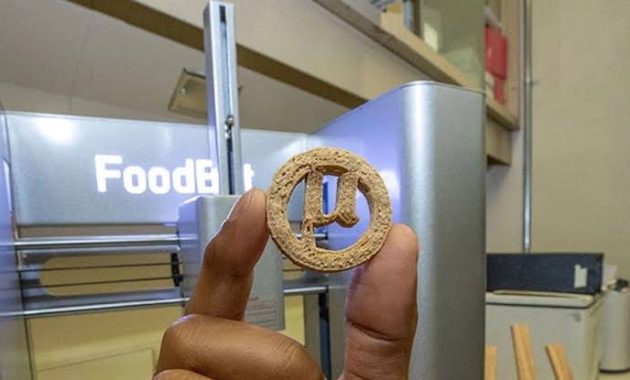
- 3D Food Printing: The extracted yeast biomass is mixed with starches, fibers, and sweeteners, then printed using a specialized 3D food printer into edible biscuits named µBites.
Types and Product Characteristics:
- Microorganism Type: Utilizes engineered baker’s yeast (Saccharomyces cerevisiae) strains functioning as micro-factories that synthesize essential nutrients.
- Product Characteristics (µBites): Formed as dry, protein-rich biscuits infused with natural vanilla flavoring, beta-carotene (Vitamin A precursor), and a chemically verified safe consumption profile.
Potential Impact for Space Missions and Earth Applications
Furthermore, the success of this microbial engineering brings broad implications for both long-duration space travel and terrestrial crises. During long-distance space missions to the Moon or Mars, astronauts cannot rely on regular shipments of fresh food supply packages from Earth.
Therefore, this waste conversion system enables astronauts to recycle their own plastic packaging waste into nutrient-dense, edible biscuits directly on location. Beyond space travel, this practical technology also offers immense potential for deployment in natural disaster zones, isolated conflict regions, and long-term submarine operations.
Research Summary
- Lead Researcher & Institution: Led by Rohan Jayasekara at Southern Illinois University (SIU) Carbondale, USA, funded by NASA.
- Publication Date: Released officially via the American Chemical Society (ACS).
- Core Method: Combines hydrothermal depolymerization of PET plastic waste with genetically engineered yeast fermentation to synthesize edible food nutrients.
- Final Product: Produces protein-enriched 3D-printed biscuits named µBites, complete with Vitamin A precursors and natural vanilla flavor.
- Primary Objective: Provides alternative emergency food survival rations for NASA space missions while addressing global plastic pollution on Earth. From Plastic Waste to Food: NASA-Funded Tech Turns Trash Into Edible 3D-Printed Biscuits